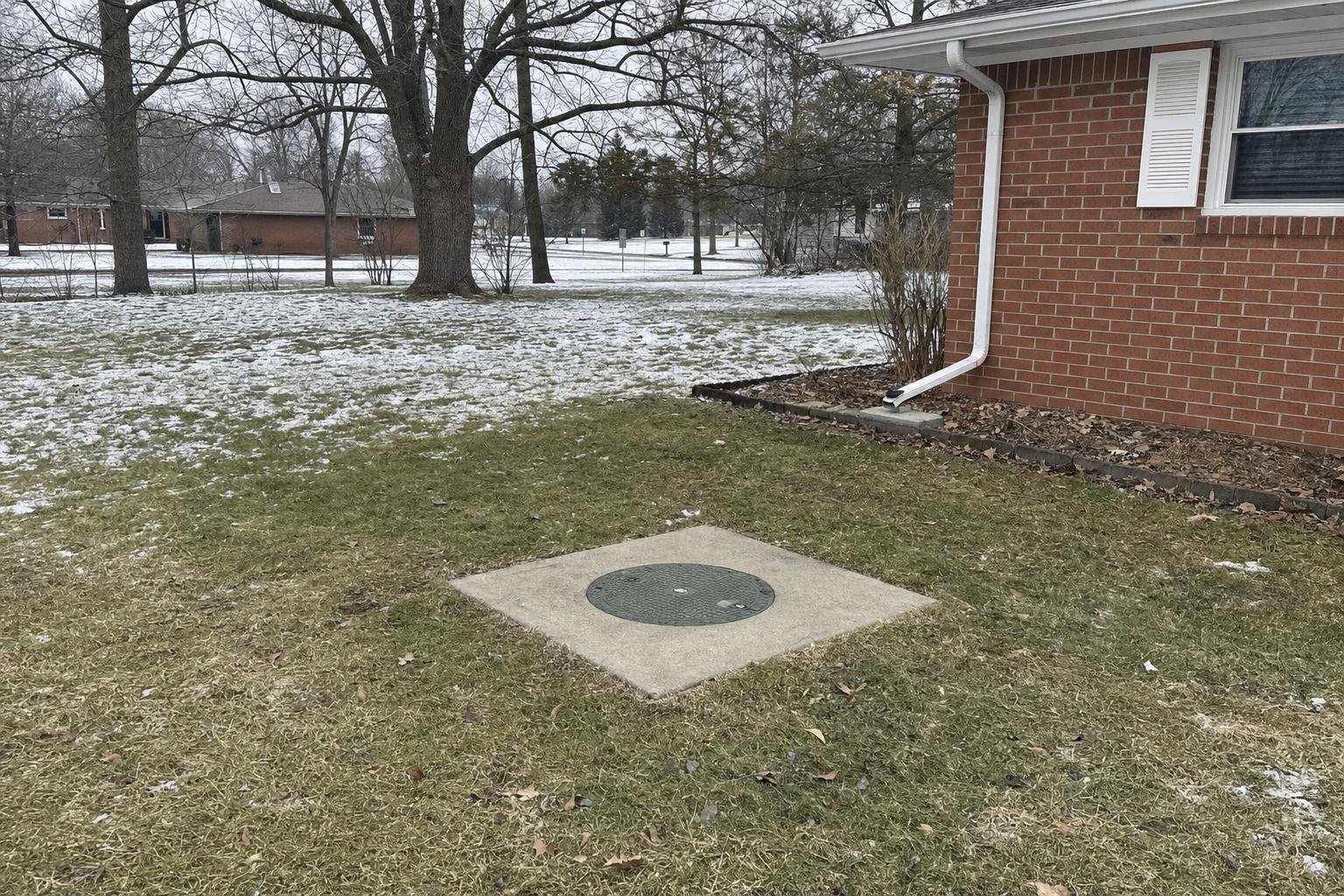
Most septic questions in Elkhart County end at one office: the Elkhart County Health Department. This page gathers the rules homeowners and buyers ask about most, with the official source for each. Rules change, so the department has the final word on any specific property.
Who regulates what
- Elkhart County Health Department. Its Environmental Health Services Division, at 4230 Elkhart Rd in Goshen, reviews plans, issues permits and inspects installations. It applies Indiana's residential rule, 410 IAC 6-8.3, the commercial rule, 410 IAC 6-10.1, and the county's Private Sewage System Ordinance 2012-153.
- Indiana Department of Health (IDOH) writes the residential rule. It is revising 410 IAC 6-8.3 in 2026, so check which version is in force before relying on a specific section.
- Indiana Department of Environmental Management (IDEM) regulates septage, the material pumped out of a tank, from removal through disposal, under 327 IAC 7.1. Anyone who pumps and hauls septage needs an IDEM septage management permit.
- The EPA does not regulate single-family septic systems, but its SepticSmart program publishes homeowner guidance, cited below.
Permits for new systems, repairs and replacements
- A health department permit is required before installing a septic tank, dosing chamber, aerobic treatment unit or soil absorption field. A registered installer has to do the work, and the department keeps the list of registered installers at its office.
- New construction: a registered soil scientist must complete an onsite evaluation (a soil boring) and submit it before a permit is considered. The department then sends written minimum requirements, sized by the number of bedrooms in the home.
- Repair or replacement: the soil boring can be done by department staff or by a registered soil scientist. The department's FAQ gives a usual turnaround of 3 to 5 business days.
- A permit lasts 2 years for new construction and 1 year for a repair or replacement, per the FAQ.
- A homeowner may install their own system but has to contact the department first about permit requirements.
- Fees come from the county's fee schedule. A new schedule took effect April 1, 2026.
Finding your system's records
- Built before 1967? Those homes were not required to get a septic permit, and the department has no diagrams for them. Its advice is to have a septic installer or contractor locate the system.
- Built later? Ask for the file with the department's Septic Lookup Request form, by fax or in person.
- Purdue Extension calls a map of every part of the system essential, and says it matters most before you build anything on the lot.
Setbacks for pools, sheds, decks and wells
The health department's FAQ lists these minimum distances:
- Any part of the system to a water well, including a sprinkler well, or to a neighbor's well: 50 feet.
- Septic tank to a house foundation: 10 feet.
- Concrete slabs: 5 feet.
- In-ground pool: 10 feet from the tank and absorption field, measured from the pool's waterline. Concrete decking around the pool: 5 feet.
- Above-ground pool: 5 feet, and never in the reserve area, because leveling the ground compacts it.
- Decks and sunrooms on posts may sit over the system if the posts stay out of the trenches. A deck over the tank needs a hatch so the lids can still be reached for maintenance.
- Sheds on skids with air space underneath may sit on the system, and they are the only sheds allowed in a reserve area. Other sheds must be 5 feet away.
Pumping and routine care
- How often: the EPA says household tanks are typically pumped every three to five years and inspected at least every three years. Systems with pumps, float switches or other mechanical parts are generally checked once a year.
- Measure, don't guess: Purdue Extension's HENV-107-W gives the same three-to-five-year range and says a professional measurement is the only sure way to know. It suggests measuring sludge and scum yearly, starting in the second or third year after a cleaning. A garbage disposal adds about 50 percent more solids.
- Additives: Purdue says an additive does not remove the need to clean the tank, and the EPA does not recommend them.
- On pumping day: per Purdue, pump through the main manhole, not the small baffle inspection ports, and clean the tank out completely. Ask for the sludge and scum levels in writing and keep every service record, as the EPA suggests.
- Outlet filter: if the tank has one, Purdue suggests cleaning it every six months at first.
- Winter and wet ground: the EPA advises insulating the inspection pipe and soil treatment area before cold weather. Purdue warns that vehicles packing down snow over the absorption field make freezing more likely, and that a tank should not be pumped while the water table is high, because an empty tank can float out.
Buying a home with a septic system
The EPA notes that many states require a septic inspection when a property changes hands. The Elkhart County Health Department's published septic pages cover permits, soil evaluations and record lookups, and they do not list an inspection required at sale. Confirm with the department for the specific property. Either way, a buyer can ask for:
- the county record, or confirmation that the house predates 1967;
- the seller's pumping and service records, with sludge and scum levels if they were written down;
- an inspection by a trained professional. Purdue's guide says it should include looking inside the tank at the inlet and outlet baffles, measuring the sludge, effluent and scum, and examining the distribution box and the absorption field.
Planning to rebuild or replace the house and keep the old system? The department does not allow an existing system to serve new home construction unless all of these are confirmed:
- a record that the system was permitted, inspected and approved by the department;
- enough tank and absorption-field capacity for the new use;
- direct observation that the system works, which a septic hauler can provide in a written report on its function, capacity and condition, after pumping and cleaning the tanks;
- a to-scale drawing showing the setbacks still hold;
- the floor plans for the new or rebuilt home.
If the system fails
- The EPA's advice is to call a septic service provider or the local health department, and to avoid touching sewage after a backup.
- The health department's FAQ says to request an onsite evaluation, which is also how to learn whether city water and sewer are available to the property.
Official sources
- Elkhart County Health Department: Septic Permits, Environmental Health FAQ, Forms, including the Septic Lookup Request, Contact
- Indiana Department of Health: Onsite Sewage Systems Program
- IDEM: Septage Management
- Purdue Extension: HENV-107-W, Operating and Maintaining an Onsite Sewage System, HENV-10-W, Septic Systems in Flooded and Wet Soil Conditions
- EPA: How to Care for Your Septic System, Frequent Questions on Septic Systems, Resolving Septic System Malfunctions, SepticSmart Top 10
This page summarizes public sources as of October 2026. It is not legal advice.
Questions about pumping or a winter problem? Book a free estimate.