
Why we don't wait for spring
The reasons to pump are the same as in any season: the tank is due, the drains are slowing down, or something has started backing up into the house. If your tank is due, pump it when it's due. A cold snap is not a reason to carry a full tank another few months, and a backup is no easier to live with in January than in May.
Frozen ground and getting to the lid
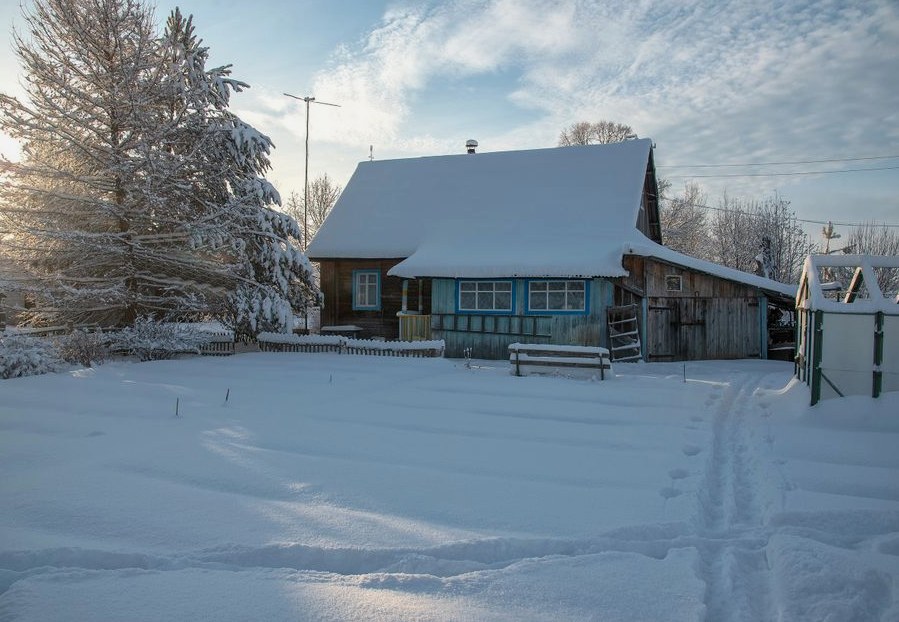
Access is the part of winter work that changes. Soil in Elkhart County has frozen more than a foot deep in many places during winters with little snow cover. The lid usually sits under soil or turf, and frozen soil does not give way to a shovel the way summer dirt does.
We carry a spade and a lid hook. The spade clears frozen ground or snow from over the opening, and the hook lifts the lid once it's exposed. If you know where the lid is, mark it before the snow comes or tell us where it sits. If it's buried and the ground is solid, uncovering it turns into light digging, and most of the extra time goes there. We'll tell you that before we start, not at the tank.
What we do once the tank is open
We remove the liquid, the scum on top and the settled sludge from every compartment, not just the first one. If the solids have compacted, we backflush them loose and pump them out.
With the tank empty, we inspect it and the baffles, replace the lids, and give you a summary of what we found. Cold weather doesn't change any of those steps, only how long it takes to reach the first one.
Winter pricing and what moves it
The pump-out is priced the same as in any other season. For a routine 1,000-gallon tank the usual range is $325 to $700, and you can ask for that range on the call. Winter adds $25 to $75 of additional service time for the harder conditions. The position within the range depends mostly on how much work it takes to reach the lid: frozen soil, deep snow, or a lid we have to locate first.
Tank size, how heavy the sludge is and whether compacted solids need backflushing move the price the way they would in July. The exact number is settled after we've seen the job, and before we start work.
Freeze and thaw, and the rivers
Hard winters here mean repeated freezing and thawing, which stresses slabs, foundations and pipes. After pumping, we check the tank and baffles with that in mind and tell you what we find.
The St. Joseph and Elkhart Rivers run through the county, and the major 2018 flooding hit Elkhart County hard. If you live near the water, keep flood exposure in mind around your septic equipment. A tank in low ground near the river faces different risks than one on higher ground, and we'll factor that into what we tell you after the inspection.
What to Expect to Pay
Use these numbers to budget, and you get a written price for your own job before you commit.
$75–$150
Our Process
In plain terms, it tends to involve:
- Insert the vacuum hose through the manhole and pump out the tank contents.
- Break up the scum layer and mix sludge with the liquid, alternately pumping liquid out and reinjecting it into the bottom of the tank.
Also Available
No-Pressure Estimates
Talking it through by phone takes a few minutes, no strings.